Saturday, February 16, 2019
Despite Crypto Depression, M&A Deals Set New Record

Friday, February 15, 2019
Brokerages Set AvalonBay Communities Inc (AVB) Target Price at $195.15
 AvalonBay Communities Inc (NYSE:AVB) has earned an average recommendation of “Hold” from the seventeen brokerages that are covering the stock, MarketBeat.com reports. One analyst has rated the stock with a sell rating, eight have assigned a hold rating and eight have given a buy rating to the company. The average 12 month price target among analysts that have updated their coverage on the stock in the last year is $196.07.
A number of brokerages have recently issued reports on AVB. SunTrust Banks raised their target price on shares of AvalonBay Communities to $208.00 and gave the stock an “average” rating in a research report on Thursday. BTIG Research upgraded shares of AvalonBay Communities from a “neutral” rating to a “buy” rating and set a $216.00 target price on the stock in a research report on Thursday, December 6th. ValuEngine lowered shares of AvalonBay Communities from a “buy” rating to a “hold” rating in a research report on Monday, January 7th. Morgan Stanley raised their target price on shares of AvalonBay Communities from $168.00 to $194.00 and gave the stock an “equal weight” rating in a research report on Monday, December 17th. Finally, BMO Capital Markets upgraded shares of AvalonBay Communities from a “market perform” rating to an “outperform” rating and raised their target price for the stock from $188.00 to $195.00 in a research report on Friday, November 2nd.
Get AvalonBay Communities alerts:In related news, EVP Edward M. Schulman sold 1,400 shares of the stock in a transaction on Friday, November 16th. The stock was sold at an average price of $183.76, for a total transaction of $257,264.00. The sale was disclosed in a filing with the Securities & Exchange Commission, which is available through this link. Also, SVP Keri A. Shea sold 1,880 shares of the stock in a transaction on Monday, November 19th. The stock was sold at an average price of $185.10, for a total value of $347,988.00. The disclosure for this sale can be found here. Over the last ninety days, insiders have sold 37,953 shares of company stock valued at $7,096,213. Corporate insiders own 0.43% of the company’s stock.
Several hedge funds and other institutional investors have recently modified their holdings of the stock. Brown Advisory Securities LLC lifted its holdings in shares of AvalonBay Communities by 1.6% during the fourth quarter. Brown Advisory Securities LLC now owns 3,323 shares of the real estate investment trust’s stock worth $563,000 after purchasing an additional 53 shares during the period. M&T Bank Corp lifted its holdings in shares of AvalonBay Communities by 0.5% during the fourth quarter. M&T Bank Corp now owns 11,665 shares of the real estate investment trust’s stock worth $2,031,000 after purchasing an additional 54 shares during the period. LPL Financial LLC lifted its holdings in shares of AvalonBay Communities by 1.1% during the fourth quarter. LPL Financial LLC now owns 5,057 shares of the real estate investment trust’s stock worth $880,000 after purchasing an additional 56 shares during the period. San Francisco Sentry Investment Group CA lifted its holdings in shares of AvalonBay Communities by 9.9% during the fourth quarter. San Francisco Sentry Investment Group CA now owns 644 shares of the real estate investment trust’s stock worth $112,000 after purchasing an additional 58 shares during the period. Finally, Rehmann Capital Advisory Group lifted its holdings in shares of AvalonBay Communities by 24.4% during the fourth quarter. Rehmann Capital Advisory Group now owns 306 shares of the real estate investment trust’s stock worth $53,000 after purchasing an additional 60 shares during the period. 94.34% of the stock is owned by hedge funds and other institutional investors.
AvalonBay Communities stock traded down $0.64 during mid-day trading on Friday, hitting $195.43. The company had a trading volume of 278,244 shares, compared to its average volume of 586,427. The firm has a market capitalization of $27.10 billion, a P/E ratio of 21.71, a P/E/G ratio of 3.24 and a beta of 0.62. AvalonBay Communities has a 1 year low of $152.65 and a 1 year high of $196.21. The company has a quick ratio of 0.77, a current ratio of 0.77 and a debt-to-equity ratio of 0.66.
AvalonBay Communities (NYSE:AVB) last announced its earnings results on Monday, February 4th. The real estate investment trust reported $2.31 earnings per share (EPS) for the quarter, missing analysts’ consensus estimates of $2.32 by ($0.01). The business had revenue of $578.52 million for the quarter, compared to analysts’ expectations of $576.56 million. AvalonBay Communities had a return on equity of 9.33% and a net margin of 42.66%. The business’s revenue was up 4.2% on a year-over-year basis. During the same quarter last year, the business posted $1.72 earnings per share. As a group, research analysts expect that AvalonBay Communities will post 9.31 earnings per share for the current fiscal year.
The business also recently declared a quarterly dividend, which will be paid on Monday, April 15th. Investors of record on Friday, March 29th will be issued a dividend of $1.52 per share. The ex-dividend date is Thursday, March 28th. This is an increase from AvalonBay Communities’s previous quarterly dividend of $1.47. This represents a $6.08 annualized dividend and a dividend yield of 3.11%. AvalonBay Communities’s dividend payout ratio (DPR) is currently 65.33%.
About AvalonBay Communities
As of September 30, 2018, the Company owned or held a direct or indirect ownership interest in 290 apartment communities containing 84,490 apartment homes in 12 states and the District of Columbia, of which 19 communities were under development and 15 communities were under redevelopment. The Company is an equity REIT in the business of developing, redeveloping, acquiring and managing apartment communities in leading metropolitan areas primarily in New England, the New York/New Jersey Metro area, the Mid-Atlantic, the Pacific Northwest, and the Northern and Southern California regions of the United States.
Featured Story: What is cost of equity?
Thursday, February 14, 2019
Neptune Technologies (NEPT) Q3 2019 Earnings Conference Call Transcript

Image source: The Motley Fool.
Neptune Technologies (NASDAQ:NEPT) Q3 2019 Earnings Conference CallFeb. 13, 2019 5:00 p.m. ET
Contents: Prepared Remarks Questions and Answers Call Participants Prepared Remarks:Operator
Good afternoon. My name is Gabriel, and I will be your conference operator today. At this time, I'd like to welcome everyone to the Neptune Wellness Solutions 2019 third-quarter earnings conference call. [Operator instructions] Thank you.
Mr. Mario Paradis, you may begin your conference.
Mario Paradis -- Vice President and Chief Financial Officer
Thank you. Good afternoon, everyone, and thank you for joining us. As mentioned, the purpose of today's call is to review our financial results for the third quarter ended December 31, 2018 and to give an update on our business operations. Joining me today is Jim Hamilton, our president and CEO.
As usual, Jim will review Neptune's operational quarter and highlights and I will discuss our quarterly financial results. I'd like to remind you that our results are in Canadian dollar and today's remarks may contain forward-looking statements. So before we begin, I'd like to remind you that all amounts are in Canadian dollars and today's remarks contain forward-looking information that represents our expectations as of today, and accordingly, are subject to change. We do not undertake any obligation to update any forward-looking statements, except as may be required by Canadian and U.S.
securities laws. A number of assumptions were made by us in preparing these forward-looking statements, which are subject to risks. Results may differ materially and details on these risks and assumptions can be found in our filing with the Canadian Securities Commission and with the Securities and Exchange Commission. I'll now turn the call over to Jim.
Jim Hamilton -- President and Chief Executive Officer
Mario, thank you very much. And welcome, everybody. Thank you for joining us today. For those who care to follow, there is a presentation posted on our website, which I will refer to as we go along.
And if you do have access to that and are looking at it on Page 4, our agenda today, I'll look at some of the highlights. Mario will comment on the third quarter, but then we'll spend more time on the cannabis business today and tomorrow, touch on our nutrition business. And then we'll be open to some questions and answers. So just looking at Page 5 and if we could just begin with some highlights, and we've actually clustered these with both those -- this is supposed to be a third-quarter call but both those that occurred in the third quarter, but subsequent events.
And we are so happy to report, and we announced in January the receipt of our processing license from Health Canada. I think, when we talked last, we said it was imminent and we are happy with the progress, and we're very happy that that occurred on January 4. Also, for those who follow some of the social-media channels, Twitter, you might have seen some photos of some inventories moving. Our cannabis inventories, we have in house.
Initial production is under way. And it's really, really fun for our team and all of us here to see that. Relative to the site and capacity, we'll speak to it in more detail, but we're on track for 200,000 kilos of capability toward the end of March and the ability to start that up through the first fiscal year. And we'll also talk a little bit about our already-installed 6,000 ton potential, and we're accelerating some work there.We are putting in some financial tools, weapons, if you will, for added flexibility for the future.
As we mentioned last time, we have a great balance sheet and cash position to execute against the strategies that we have on the table right now. But we are preparing for new and interesting opportunities, and we're going to be putting the financial tools in place, should they be needed. And we'll speak to that in a little bit more detail shortly. So those were some subsequent events.
Touching back more on the third quarter, we're very pleased about our arrangement with Lonza. We have continued growth in our nutrition business. Remember, all our sales in the third quarter were nutrition. And we're very excited by some of the draft legislation that is pending for Canada.
And as such, and based on everything we're seeing in this market with our customers and conversations, we are boosting our estimated sales volumes as we speak, and we'll get a little bit more detail in the presentation in a moment. But before that, we think we will have to reflect a little bit shortly on the third-quarter financials. And then, Mario, if I could pass it back to you to touch on that, please. Thanks.
Mario Paradis -- Vice President and Chief Financial Officer
Yeah. Thank you, Jim. So my comments today will focus on the quarterly performance, unless otherwise indicated. I also want to remind you that we stopped to consolidate Acasti Pharma after the third year of last year.
However, the comparative results of our quarterly results of operation in the consolidated financial statements still include Acasti's numbers for the three-months period ended December 31, 2017. In addition, considering our recent entry in the cannabis industry, we will discuss our two reportable operating segments being the nutraceutical and the cannabis segments. Corporate, general and administrative expenses, net finance costs and income taxes are not allocated to the segments and they are presented as unallocated costs. Consolidated results for the third-quarter fiscal-2019 results can be found in our press release and in Neptune's consolidated financial statements and related MD&A available on SEDAR, EDGAR and under the Investors Section on Neptune's website. And now, at the Page 8 of the deck, total revenue coming from the nutraceutical segment for the second quarter were CAD6.5 million, an increase of 2% when compared with the same period last year, after excluding the impact of our krill oil manufacturing business, sold last year.
Our quarterly gross margin as a percentage of sales was 30%, compared to 22% for the same period last year and in line with our expectations. In terms of dollars on total revenues, we generated CAD2.2 million, a CAD0.2 million increase over same period last year, mainly related to better gross-margin percentage. In terms of EBITDA contribution from the nutraceutical segment, the adjusted EBITDA for the quarter is practically the same as the same period last year, with CAD1.2 million, compared to CAD1.1 million last year. R&D expenses related to the cannabis segment were CAD1.6 million, compared with CAD1.4 million for the same quarter last year.
The slight increase of CAD0.2 million is mainly related to additional compensation and depreciation of the property plant and equipment. Total investment in this segment mainly consisted of salary and fixed costs at our manufacturing plant in Sherbrooke, including the depreciation, in order to prepare the site and start the cannabis oil extraction business in compliance with Health Canada's requirements. During this quarter, SG&A related to the cannabis segment totaled CAD0.5 million, compared to CAD0.3 million last year and consisted mainly of our business-development team, which incurred traveling and representation expenses. The non-IFRS operating loss of the cannabis segment before taking into consideration noncash stock-based comp and the depreciation and amortization was CAD1.3 million in the third quarter in comparison with an operating loss of CAD1.1 million in the same period last year and is pretty stable with the first two quarters of the current year.
Corporate, general and administrative expenses totaled CAD2.4 million during this quarter, compared with CAD1.5 million in the same period last year. This increase of CAD0.9 million is mainly due to the increase in compensation, including CAD0.4 million of noncash, stock-based comp and also legal fees and other corporate expenses. The non-IFRS consolidated operating loss for the quarter was CAD1.9 million, compared to a loss of CAD1.3 million in the same period last year, excluding Acasti's results. The loss increase is mainly related to our investment in the cannabis business development and the increase in corporate G&A expenses.
Turning to our liquidity. At the end of December 2018, our cash position was CAD15.6 million, with a total debt of CAD3.1 million. During the quarter, we disbursed CAD2.1 million for our Phase 1 and 2 CAPEX investment. There is approximately still CAD3.6 million to be paid on the CAD10 million investment for Phase 1 and 2.
We estimate that approximately CAD2 million could be disbursed during the fourth quarter and the remaining during the first quarter next fiscal year. We continue to have the necessary cash to execute our business plan. I will now turn the call over to Jim.
Jim Hamilton -- President and Chief Executive Officer
Mario, thank you for all the financial detail. Let's go to Page 11 and talk about our cannabis business, and Page 12. As I mentioned earlier, license granted, production under way, which is really, really fun. I was joking with our production guys not so long ago, but all their brand new gear gets dirty now, and we are, like I say, we have inventories in the house.
We are executing on our commercial agreements. We have purchase orders in house and our Phase 1 CO2 technology is being commissioned, run, operating as we speak. Construction for installation of the solvent facility, the initial Phase 2 solvent facility, is under way right now. And we expect construction to be complete on that, end of March and start-up through the April-June period.
Looking at Page 13, in terms of start-up. I think, that's never a step. It's always a curve. And we think, that by midyear, we'll have that 200 metric tons available.
I will say, and we'll touch on this a little bit more on demand, we're seeing tremendous demand for extraction. And, remember, this facility has built and installed the capability for 6,000 tons of production capacity. That's built and installed. It's run before, we ran krill with it, and we are looking at accelerating the evaluation of bringing that online sooner.
And what do we mean by that, when it's already built and installed? We are looking at some possibilities of optimizing the process in terms of jacketing some vessels and some temperature controls that are more sympathetic to the quality of cannabis manufacturing that we think could be highly value added, based on our research and lab trials, so that is under way as we speak. So 200 tons ready to go, as we said, midyear. And the 6,000 ton capability exists and is on deck and we're evaluating that as we speak. Page 14, cannabis processing sales volumes.
Based on contracts, conversations, and what we see right now, we are boosting, for those who have access to the presentation, we're boosting what we're anticipating in the first 12 months of operations to be in the 30 to 50 metric ton production zone. And we've also looked at increasing years two and year three, based on what we're seeing. And as Mario and I have talked in great detail, this business is projected to be EBITDA and cash-flow positive within the 12 months of operations and in the fiscal year, which I remind everybody, begins April 1. We will see, Mario, shipments in cannabis, we anticipate, between now and the end of the fourth quarter.
Looking forward, on Page 15, I think, it's really important to understand when you look at our business and you look at the extraction and value-added business, to know the zone that we are participating in. And this is a zone, a sector, a segment that we like a lot. And Page 16 we shared before, and this is some data from the middle of last year of California market, which is 60% and north, based on extracts. Many people in the business.
And then when I travel and visit and talk, they predict it will be even 80% in those markets, as we speak. But looking at Page 7, in Canada, that's not the case today. The majority, of course, is consumed in flower, but that will change soon. Please keep in mind, in the Canadian context, the new regulations are pending.
The draft is out there. And the expectation is that this will be approved and enacted October of this year. And what that means is it will be opening up whole new fields for products that will be built on extracts, which is really important. And when we look at Page 18, not only in the Canadian context, and not only for THC and CBD, in the U.S.
context, we're seeing, as many have followed, some rapidly developing legislation, with the de-scheduling of hemp CBD with the recent U.S. Farm Bill. There are some very interesting developments happening with the World Health Organization in terms of how CBD should also be de-scheduled internationally. And I think, just for reference, it's interesting, especially those who have been with us a number of years and know the omega-3 days and krill days.
CBD in the United States, and think about this for a moment, where it was federally illegal in the DEA perspective as well as not permitted from an FDA perspective, it is today larger than the vitamin E sector, and it is on track to surpass the omega-3 supplement category very soon. This is really, for me, a long-term nutrition-products person, quite a staggering dimension. And we are seeing a tremendous amount of interest, as we engage in the U.S. context and the Canadian context, for extracts.
We like the extraction business, and that's why Page 19, our objective is and continues to be focused on extraction purification and formulation of value-added differentiated products and to do so on a global scale. And to extract is never enough, and we've talked about that before about differentiation. On Page 20, we thought it might be helpful to explain a little bit more how we're trying to build the matrix that supports differentiation, which is so important to consumers and customers. So extraction, purification, isolation, clearly, and we think we're pretty good at that.
We've been doing that quite a number of years. In fact, some may recall some patent filings in that regard last year, in the latter half of last year. But condition-specific formulas, we think, will be very important, condition-specific formulas that deliver on specific consumer needs. It's not enough to be single-entity, but rather, formulated products.
And also, to deliver those condition-specific needs in unique delivery forms that are delivering value. And you will see from us, over time, more examples of how we are executing against these three elements of differentiation. A little bit more detail on the unique delivery forms with our Lonza arrangement, which is on Page 21. This is an agreement, a licensing and IP agreement and a purchase agreement with Lonza.
The picture there, for those who can see it on 21, is example of how that room will look and the equipment. And this is for the production of, really, world-leading, two-piece hard-shell technology, really, in our experience and belief as a corporation, the better delivery form for high-value API products. We like it very much in terms of the potential higher stability, especially in complex formulas where terpenes and the maintenance of those terpenes in the formula are important. And we like this a lot, and we're getting a lot of very, very interesting engagement with customers in this regard and terrific technical support in R&D development with Lonza for same, so an example of execution on differentiation.
Page 22, just for those who have been following, we have filed today a base shelf prospectus. This would be an example, as we mentioned earlier, about putting the financial weapons in place to give us the flexibility for future strategic moves. Again, our cash position is sufficient for us to execute against the existing plan, but for strategic moves beyond and above that, we want to make sure that we have the financial infrastructure in place so we can move quickly. And it's not just the shelf, but similar tools in terms of developing non-dilutive instruments with scale financial institutions, which Mario has in development as we speak.
So putting the infrastructure in place for future strategic moves. And just moving to our nutrition business, I wanted to speak on this a little bit more. We touched on this on Page 24 last time, in October. Our nutrition people have been working on some very interesting formulas, which would be a nutrition solution for consumer marketers that cannot participate in the cannabis space, because of licensing and other legal constraints.
So an ability for them to play in the space and appeal to consumer needs in this regard, and we have some interesting developments there in Canada. But given the CBD developments in the United States, we think this is a fantastic differentiating platform that we can engage with, combined with CBD in future. And we're actively engaging in the U.S. context in the nutrition products space, as we speak, relative to that concept.So some comments on nutrition, a little bit about cannabis today and rolling forward.
We like the extraction business. We're happy to be there, and we're happy to be operating in the cannabis space as a licensed producer. And with all that, I think we can conclude the formal remarks. And we'd be happy to invite questions at this point in time, if our operator is with us still.
Questions and Answers:Operator
Yes, first line will be -- your first question, sorry, will be from Doug Loe from Echelon Wealth Partners. Your line is open.
Doug Loe -- Echelon Wealth Partners -- Analyst
Thanks very much, gentlemen, and good afternoon. Congratulations on all the recent progress here. Just wanted to focus on your Lonza relationship, if I may, Jim. I mean, you talked-- so first of all, congratulations on putting that in place toward quarter end, and assume much of the alliance sort of relates to in licensing some of their IP around Capsugel and so forth.
I was just wondering if you had any IP strategy around filing on composition of matter for incorporating cannabis oil into Capsugel, in combination with other small molecules that Lonza would have additional expertise in formulating and whether there might be some IP that you might be filing in that realm. And maybe, just a little bit more detail on sort of timelines over which you expect to be generating some Capsugel revenue, and if you're at liberty to share, maybe some expectations on what revenue that alliance might throw off over the next, say, six to eight quarters.
Jim Hamilton -- President and Chief Executive Officer
Doug, thank you. Look, there's multiple kind of solutions in this regard. One would be softgel and capsules. You typically see that, often in the omega-3 space or high-volume nutrition products.
It's a good delivery form. We personally believe in high-value items, products such as the cannabis space, the two-piece hard shell is far more an appropriate product. We not only say that for just the manufacturing sort of efficiencies, if you will, in terms of product disappearance in production and a few things like that, but we especially like it in terms of some of the stability profiles and the formulation properties that the two-piece can bring. Now, we like Lonza too.
We've worked and known them for many, many years. They're the largest in the space, globally. They have between probably 40% and 50% of the global market share for the capsule business. They have tremendous laboratory and R&D capabilities as well that we've been collaborating with them on as well.
Remember too, that they're a publicly traded Basel-based, Basel, Switzerland-based corporation, with operations around the world. And we like too the collaborative opportunities that exist from a commercialization standpoint. Remember, it's focused in Canada today, but the collaboration that can exist not only technically but also commercially between the two organizations. So we like that a lot.
Their IP is mostly around the delivery system, Doug, and I would say not so much around formulation. But we are very interested and are working as we speak on additional formulation, I would say, consumer-condition-specific formulations that could be helpful, and the capsule would be a perfect vehicle to deliver this in. And remember, especially in condition-specific formulas, they're often taken chronically. And so, for example, for inflammation, pain, anxiety, it's frequently taken every day, rather than once in a while.
I don't know, Doug. I hope that answers the question.
Doug Loe -- Echelon Wealth Partners -- Analyst
No, that's good feedback, Jim. Thanks. And then, a quick question for Mario while I'm on the line here. Just wondering what proportion of the nutritional revenue, Biodroga revenue, would you say is targeting cannabinoid formulation initiatives.
I mean, specifically looking at Slide 20 here and all of the novel patents and research initiatives you have ongoing, I just wonder how much of that is actually going through Biodroga and what proportion of revenue is allocated to its development.
Jim Hamilton -- President and Chief Executive Officer
Right now zero, Doug, because -- if I may, Mario, right now it's zero, because it's federally illegal for them to commercialize that in Canada. And it has been federally illegal for them to do so in the United States as well. I can say one of the things that we've been doing the last weeks is engaging with both the TSX and the NASDAQ, as well as our insurance companies and the bankers to make sure that everything we do, whether that be in the United States or Canada, is done in a way that is very compliant with their views on the business. We believe that we've got understandings with at least some of them, thus far, and we'll continue to do that and conclude that very soon, and we'll be focused in the United States with Biodroga.
And when I say Biodroga, in the United States, what we mean more by that is it is more of a nutrition-products approach in the United States with hemp CBD than we see in the regulated markets of Canada and rest of world in this space. So in fact, I was just speaking with one of the large multinationals this afternoon. I think the -- what we're seeing is the big consumer-product companies in the United States that were really hands off, I would say, as recent as October, November, have a very, very different perspective in the last, I would say four to six weeks. And we're seeing quite a number of projects starting to accelerate with them, as we speak.
So I think, the U.S. platform is rapidly changing right now, Doug, so we'll see how that evolves. But to date, we've not been legally able to commercialize anything in CBD hemp, U.S. or Canada.
Doug Loe -- Echelon Wealth Partners -- Analyst
Got it. Great feedback. Thanks, Jim.
Operator
[Operator instructions] Our next question comes from the line of Daniel Simon from Nomus Investors. Your line is open.
Unknown Speaker
Hey, Jim, congratulations on everything. Just in January, you stated that when you received the processing license, that the company will expect sales from existing supply contracts for the contracts that are about to be signed. Is there any further clarification on that? Or will sales be driven mainly from the Canopy contract?
Jim Hamilton -- President and Chief Executive Officer
Well, Daniel, it's a great question. And you know, we-it's something I'll tell you that we as a management team debate a lot. In fact, we've had this discussion with our board the last couple of days about how transparent we want to be in this regard. And we have a number of major investors on our board and are very, I would say, investor-friendly.
But we also have come to the conclusion that it'd be commercially in our interest not to get too transparent in terms of the number and the nature and the characteristic of our commercial agreements, Daniel, as much as we can, because it's not helpful for us in terms of some of our negotiations and some of our engagements as we go forward. And that includes, by the way, not just on the commercial deals, but also in terms of some of our costs and margins, at this stage. Although, Mario reminds me that that will become more transparent in our books as we go quarter to quarter, going forward. Having said that, we feel, and I think it's important for investors now to understand, as we've said before, when we look at our site infrastructure and operating costs, that is transparent in our books today.
And we'd like to emphasize that we don't see a major variable component in our site operating costs as we add volumes onto that site. Now, that would exclude getting into some maybe more heavy labor application forms in future. But today, for the processing, and as we fill that facility, we don't see a big major variable-cost expense. Number two is, I think, Daniel, when you look at our books and our numbers as we go forward, as with everyone else in the extraction space, I think, another will be important is that will those revenues include raw materials, yes or no? And I think, at times, you'll see raw materials in and other times, raw materials out.
And so it's going to be -- and for Doug Loe and some of the analysts that follow, it's going to be a challenge, because, I think, a lot of us are top-line centric. And I think, ultimately, for people in our space, it's going to be very much bottom-line focused will be where the big differentiators are. So Daniel, we're going to ask you to try and work with us a little bit as we get the commercialization going. But let's just say, as we put in that one slide, and we've got agreement with our board on this as we speak today, that based on current contracts and based on the engagement we're having with customers, we feel very, very good about the line of sight we have on the numbers that we just shared in terms of our site engagement, if you will, on the volumes.
And that site is licensed, and that site is now operating. We're really excited with that.
Unknown Speaker
Very good. Thank you.
Jim Hamilton -- President and Chief Executive Officer
Thanks, Daniel.
Operator
I have no further questions at this time. I will now turn the call back over to Mr. Jim Hamilton for closing remarks.
Jim Hamilton -- President and Chief Executive Officer
Well, thank you very much. And Mario, thank you for you and the team, and everyone for all the work and the preparations for this. And just to summarize for all our supporters and investors that this sector and segment that we are in, I really, really like it. It is a great place to be, and we're very excited by the industry dynamics.
We're very excited by the engagement we're getting with customers and other players in the space. We are very happy to be licensed, and we're very happy to be moving forward. And thank you for the support. Watch this space.
It's going to be really fun as we roll forward. So thank you very much. Thanks for listening, and we'll be in touch soon. All the best.
Operator
[Operator signoff]
Duration: 31 minutes
Call Participants:Mario Paradis -- Vice President and Chief Financial Officer
Jim Hamilton -- President and Chief Executive Officer
Doug Loe -- Echelon Wealth Partners -- Analyst
More NEPT analysis
This article is a transcript of this conference call produced for The Motley Fool. While we strive for our Foolish Best, there may be errors, omissions, or inaccuracies in this transcript. As with all our articles, The Motley Fool does not assume any responsibility for your use of this content, and we strongly encourage you to do your own research, including listening to the call yourself and reading the company's SEC filings. Please see our Terms and Conditions for additional details, including our Obligatory Capitalized Disclaimers of Liability.
10 stocks we like better than Neptune TechnologiesWhen investing geniuses David and Tom Gardner have a stock tip, it can pay to listen. After all, the newsletter they have run for over a decade, Motley Fool Stock Advisor, has quadrupled the market.*
David and Tom just revealed what they believe are the 10 best stocks for investors to buy right now... and Neptune Technologies wasn't one of them! That's right -- they think these 10 stocks are even better buys.
See the 10 stocks
*Stock Advisor returns as of January 31, 2019
Wednesday, February 13, 2019
Under Armour Earnings: UAA Stock Pops on Q4 Results
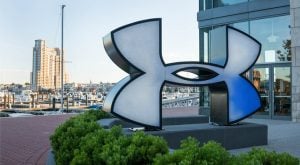
Under Armour earnings for the fourth quarter of 2018 has UAA stock heading higher on Tuesday.

 Source: Shutterstock
The Under Armour (NYSE:UAA) earnings report for the fourth quarter of 2018 starts off with earnings per share of 9 cents. This is an improvement over the company’s flat earnings from the fourth quarter of 2017. It was also good news for UAA stock by beating out Wall Street’s earnings per share estimate of 4 cents for the period.
Under Armour earnings for the fourth quarter of the year also have it bringing in net income of $4.23 million. This is better than the company’s net loss of $87.92 million reported in the same period of the year prior.
The most recent Under Armour earnings report also has the company announcing an operating loss of $10.45 million. This isn’t as wide as the athletic wear company’s operating loss of $37.09 million from the fourth quarter of the previous year.
Revenue reported in the Under Armour earnings release for the fourth quarter of 2018 was $1.39 billion. This is an increase over the company’s revenue of $1.37 billion reported during the same time last year. It was also a boon to UAA stock by coming in above analysts’ revenue estimate of $1.38 billion for the quarter.
Under Armour notes that its revenue in North America was down 6% in the fourth quarter of the year. However, its total revenue still got a boost from a 24% increase in International revenue during the quarter.
UAA stock was up 6% as of Tuesday morning.
As of this writing, William White did not hold a position in any of the aforementioned securities.
Compare BrokersMonday, February 11, 2019
Hot Low Price Stocks To Watch For 2019
Executives at Helios and Matheson (HMNY), the parent company of the movie subscription service, are asking shareholders to vote on a plan that could increase the stock by as much as 500-fold.
That plan was outlined in a new document filed Monday with the Securities and Exchange Commission. The vote will take place at a shareholder meeting October 18.
If the plan is approved, stockholders would trade in as many as 500 shares for a single share worth about 500 times as much. The final ratio has yet to be determined, and will be laid out in a future announcement.
The change would be largely cosmetic for shareholders, since their stakes would be valued the same as before the split.
But the plan could boost the stock price from about 2 cents to as much as $10 — enough to possibly keep the stock trading on the Nasdaq stock exchange. Nasdaq has warned Helios and Matheson that its stock could be delisted because of its low price.
Hot Low Price Stocks To Watch For 2019: Rubicon Technology, Inc.(RBCN)
Advisors' Opinion:- [By Shane Hupp]
News coverage about Rubicon Technology (NASDAQ:RBCN) has been trending somewhat positive on Monday, according to Accern Sentiment. The research group identifies positive and negative media coverage by reviewing more than 20 million blog and news sources in real-time. Accern ranks coverage of public companies on a scale of negative one to one, with scores closest to one being the most favorable. Rubicon Technology earned a coverage optimism score of 0.22 on Accern’s scale. Accern also assigned media stories about the semiconductor company an impact score of 43.6568126847622 out of 100, indicating that recent media coverage is somewhat unlikely to have an impact on the company’s share price in the next few days.
- [By Logan Wallace]
Rubicon Technology (NASDAQ:RBCN) was downgraded by investment analysts at ValuEngine from a “hold” rating to a “sell” rating in a research note issued on Thursday.
Hot Low Price Stocks To Watch For 2019: Boot(h)
Advisors' Opinion:- [By Ethan Ryder]
Monarch Casino & Resort (NASDAQ: MCRI) and Hyatt Hotels (NYSE:H) are both consumer discretionary companies, but which is the superior stock? We will contrast the two companies based on the strength of their profitability, dividends, institutional ownership, risk, earnings, valuation and analyst recommendations.
- [By Logan Wallace]
Hydro One (TSE:H) – Analysts at National Bank Financial decreased their FY2019 earnings per share (EPS) estimates for Hydro One in a research report issued on Tuesday, May 15th. National Bank Financial analyst P. Kenny now anticipates that the company will post earnings per share of $1.37 for the year, down from their prior estimate of $1.40. National Bank Financial currently has a “Sector Perform” rating and a $23.00 target price on the stock.
- [By Logan Wallace]
Stock analysts at Jefferies Group assumed coverage on shares of Hyatt Hotels (NYSE:H) in a research report issued on Thursday, Marketbeat.com reports. The firm set a “hold” rating and a $85.00 price target on the stock. Jefferies Group’s price target would indicate a potential upside of 0.97% from the stock’s current price.
- [By Shane Hupp]
Shares of Hyatt (NYSE:H) have received a consensus recommendation of “Buy” from the eighteen analysts that are covering the stock, Marketbeat.com reports. One investment analyst has rated the stock with a sell recommendation, seven have given a hold recommendation and ten have issued a buy recommendation on the company. The average twelve-month target price among brokerages that have updated their coverage on the stock in the last year is $80.42.
Hot Low Price Stocks To Watch For 2019: Orezone Gold Corp (ORE)
Advisors' Opinion:- [By Stephan Byrd]
Galactrum (CURRENCY:ORE) traded 1.7% lower against the U.S. dollar during the 24 hour period ending at 18:00 PM Eastern on August 31st. Galactrum has a total market capitalization of $866,847.00 and approximately $5,272.00 worth of Galactrum was traded on exchanges in the last 24 hours. One Galactrum coin can now be purchased for about $0.42 or 0.00006032 BTC on major exchanges including Stocks.Exchange and Cryptopia. In the last seven days, Galactrum has traded 12.5% higher against the U.S. dollar.
- [By Stephan Byrd]
Galactrum (ORE) is a PoW/PoS coin that uses the
Lyra2RE hashing algorithm. It launched on November 11th, 2017. Galactrum’s total supply is 2,092,679 coins and its circulating supply is 1,372,679 coins. Galactrum’s official Twitter account is @galactrum. Galactrum’s official website is galactrum.org. - [By Peter Graham]
Sandstorm's due diligence is thorough, they don't just invest in any company. They like West Africa because they understand the area and the opportunities that exist there. Sandstorm is a royalty and streaming company, so they make these investments and receive cashflow deals that often kick in much later on. But they have already established a presence in Burkina and have deals in place with larger companies like Orezone Gold (TSXV: ORE) and Endeavour Mining (TSX: EDV). Sandstorm's investment also potentially gives us access to their marketing department through something they call Launch Lab, and it looks like it will really benefit our own marketing efforts and will expose us to more opportunities over the coming year.
- [By Jim Robertson]
Finally, Richard Seville, the CEO of Brisbane-based Orocobre Ltd (ASX: ORE) which began lithium sales in 2015 from northern Argentina and also experienced difficulty boosting output, commented that an "inability to access traditional funds has delayed the development of the sector" and that "these projects aren't easy -- so the banks just don't want to go there."
- [By Shane Hupp]
Galactrum (ORE) is a PoW/PoS coin that uses the
Lyra2RE hashing algorithm. It was first traded on December 13th, 2017. Galactrum’s total supply is 2,781,952 coins and its circulating supply is 2,061,952 coins. Galactrum’s official website is galactrum.org. Galactrum’s official Twitter account is @galactrum.
Hot Low Price Stocks To Watch For 2019: Virtusa Corporation(VRTU)
Advisors' Opinion:- [By Max Byerly]
Virtusa (NASDAQ:VRTU) – Equities research analysts at SunTrust Banks issued their Q1 2020 earnings per share (EPS) estimates for shares of Virtusa in a report released on Wednesday, May 16th. SunTrust Banks analyst F. Atkins expects that the information technology services provider will post earnings of $0.33 per share for the quarter. SunTrust Banks currently has a “Hold” rating on the stock. SunTrust Banks also issued estimates for Virtusa’s Q2 2020 earnings at $0.46 EPS, Q3 2020 earnings at $0.56 EPS and Q4 2020 earnings at $0.60 EPS.
- [By Ethan Ryder]
Get a free copy of the Zacks research report on Virtusa (VRTU)
For more information about research offerings from Zacks Investment Research, visit Zacks.com
- [By Stephan Byrd]
Great Lakes Advisors LLC grew its holdings in shares of Virtusa (NASDAQ:VRTU) by 38.0% during the 1st quarter, according to its most recent filing with the Securities and Exchange Commission. The institutional investor owned 166,531 shares of the information technology services provider’s stock after buying an additional 45,860 shares during the quarter. Great Lakes Advisors LLC owned 0.57% of Virtusa worth $8,070,000 at the end of the most recent reporting period.
Hot Low Price Stocks To Watch For 2019: Cray Inc(CRAY)
Advisors' Opinion:- [By Stephan Byrd]
Get a free copy of the Zacks research report on Cray (CRAY)
For more information about research offerings from Zacks Investment Research, visit Zacks.com
- [By Ethan Ryder]
Cray (NASDAQ: CRAY) and One Stop Systems (NASDAQ:OSS) are both small-cap computer and technology companies, but which is the better investment? We will compare the two businesses based on the strength of their risk, valuation, institutional ownership, analyst recommendations, dividends, earnings and profitability.
- [By Motley Fool Staff]
Gardner: There's a lot of biotech and some computer companies. We once visited the Cray Corporation (NASDAQ:CRAY), which was one of the early supercomputer companies. Seymour Cray was one of the pioneers of supercomputing. If you look up Cray Computers, they were the supercomputers back in the 80s, when computers were a lot bigger than they are today, and probably slower, but they were super back then. Anyway, that was a Minneapolis company I once visited. Our dad used to take us, occasionally, on trips. We'd just drop by corporate headquarters and talk to an investor relations person. That was one of the times I did that. It wasn't like I did it dozens of times. We did maybe five or six times. But I'll always remember Cray Computer.
- [By Joseph Griffin]
Fmr LLC boosted its position in Cray Inc. (NASDAQ:CRAY) by 1.0% in the 2nd quarter, Holdings Channel reports. The firm owned 789,269 shares of the technology company’s stock after acquiring an additional 7,860 shares during the quarter. Fmr LLC’s holdings in Cray were worth $19,416,000 at the end of the most recent reporting period.
Hot Low Price Stocks To Watch For 2019: El Paso Electric Company(EE)
Advisors' Opinion:- [By Stephan Byrd]
Korea Electric Power (NYSE: KEP) and El Paso Electric (NYSE:EE) are both utilities companies, but which is the better investment? We will contrast the two companies based on the strength of their earnings, institutional ownership, valuation, profitability, risk, analyst recommendations and dividends.
- [By Stephan Byrd]
Get a free copy of the Zacks research report on El Paso Electric (EE)
For more information about research offerings from Zacks Investment Research, visit Zacks.com
- [By Ethan Ryder]
Shares of El Paso Electric (NYSE:EE) have been assigned a consensus recommendation of “Hold” from the seven ratings firms that are covering the company, MarketBeat reports. Two investment analysts have rated the stock with a sell recommendation, four have assigned a hold recommendation and one has issued a buy recommendation on the company. The average 1 year price target among brokers that have updated their coverage on the stock in the last year is $51.33.
Sunday, February 10, 2019
Top 10 Biotech Stocks To Watch For 2019
Northern Trust Corp boosted its position in shares of Blueprint Medicines Corp (NASDAQ:BPMC) by 0.1% in the first quarter, according to the company in its most recent 13F filing with the Securities and Exchange Commission (SEC). The fund owned 497,135 shares of the biotechnology company’s stock after acquiring an additional 726 shares during the period. Northern Trust Corp owned 1.13% of Blueprint Medicines worth $45,588,000 at the end of the most recent quarter.
A number of other institutional investors have also recently added to or reduced their stakes in BPMC. Bank of Montreal Can lifted its position in Blueprint Medicines by 2,719.3% during the 4th quarter. Bank of Montreal Can now owns 6,428 shares of the biotechnology company’s stock worth $484,000 after acquiring an additional 6,200 shares during the last quarter. Schwab Charles Investment Management Inc. lifted its position in Blueprint Medicines by 11.5% during the 4th quarter. Schwab Charles Investment Management Inc. now owns 188,320 shares of the biotechnology company’s stock worth $14,202,000 after acquiring an additional 19,485 shares during the last quarter. Strs Ohio lifted its position in Blueprint Medicines by 69.6% during the 4th quarter. Strs Ohio now owns 3,900 shares of the biotechnology company’s stock worth $294,000 after acquiring an additional 1,600 shares during the last quarter. Zurcher Kantonalbank Zurich Cantonalbank lifted its position in Blueprint Medicines by 57.3% during the 4th quarter. Zurcher Kantonalbank Zurich Cantonalbank now owns 1,866 shares of the biotechnology company’s stock worth $141,000 after acquiring an additional 680 shares during the last quarter. Finally, Public Employees Retirement Association of Colorado acquired a new position in Blueprint Medicines during the 4th quarter worth $227,000. 97.64% of the stock is owned by hedge funds and other institutional investors.
Top 10 Biotech Stocks To Watch For 2019: Alnylam Pharmaceuticals Inc.(ALNY)
Advisors' Opinion:- [By Brian Orelli]
Earlier this week, Dicerna released promising interim phase I data for its lead drug, DCR-PHXC, in patients with primary hyperoxaluria type 1 and type 2. The company plans to start a trial to be used to support an FDA approval in the first quarter of 2019, but that'll put it behind Alnylam Pharmaceuticals (NASDAQ:ALNY), which is about to start a phase 3 study testing its drug, lumasiran, in patients with primary hyperoxaluria type 1. Hopefully, Dicerna can use some of its new capital to help accelerate enrollment in its trial to try to catch up to Alnylam.
- [By Brian Orelli]
Alnylam Pharmaceuticals (NASDAQ:ALNY) released first-quarter results last week, but all eyes were looking forward as the company waits for a potential approval of its hereditary TTR amyloidosis (ATTR) drug, patisiran.
- [By Jim Crumly]
Commercial success for Tegsedi is not a done deal even if it's approved worldwide; Alnylam Pharmaceuticals' (NASDAQ:ALNY) competing drug patisiran was approved by the FDA on Aug. 10. Alnylam's clinical testing showed cardiac benefits for patients whose cardiovascular systems have been affected by the disease, and Alnylam believes that will give patisiran an advantage over Tegsedi. But in the conference call, Akcea executives brushed off that concern and pointed to the advantage Tegsedi has in being an injection that can be delivered at home, versus patisiran, which is administered intravenously in a clinic. We shall see.
- [By Keith Speights]
It's not exactly David vs. Goliath. However, Bellicum Pharmaceuticals (NASDAQ:BLCM) and Alnylam Pharmaceuticals (NASDAQ:ALNY) are definitely in different leagues right now. Both are clinical-stage biotechs, but Bellicum's market cap is less than $350 million while Alnylam's market cap is close to $10 billion.
Top 10 Biotech Stocks To Watch For 2019: Biogen Idec Inc(BIIB)
Advisors' Opinion:- [By Chris Lange]
The S&P 500 stock posting the largest daily percentage loss ahead of the close Monday was Biogen Inc. (NASDAQ: BIIB) which traded down nearly 4% at $329.58. The stock's 52-week range is $244.28 to $348.84. Volume was 1.2 million matching the daily average of 1.2 million shares.
- [By Chris Lange]
Short interest in Biogen Inc. (NASDAQ: BIIB) decreased to 3.45 million shares from the previous 3.50 million. The stock recently traded at $274.50, within a 52-week range of $244.28 to $370.57.
- [By Keith Speights]
Shares of Biogen Inc. (NASDAQ:BIIB) were up 15.2% as of 11:35 a.m. EDT on Friday after the biotech, along with partner Eisai, reported encouraging results from a phase 2 clinical study of BAN2401 in treating Alzheimer's disease. Patients taking BAN2401 achieved statistically significant improvement compared to patients on placebo after 18 months in slowing progression of Alzheimer's disease and in the reduction of amyloid accumulations in the brain.
Top 10 Biotech Stocks To Watch For 2019: Amgen Inc.(AMGN)
Advisors' Opinion:- [By Keith Speights]
Amgen Inc. (NASDAQ:AMGN) and Pfizer Inc. (NYSE:PFE) actually have quite a bit in common. They co-market one of the world's best-selling drugs, Enbrel. They both face some headwinds with declining sales of older drugs. Each company has promising new drugs. And both stocks are up by nearly the same percentage over the last 12 months.
- [By Logan Wallace]
Philadelphia Trust Co. decreased its holdings in Amgen, Inc. (NASDAQ:AMGN) by 8.0% during the 2nd quarter, according to the company in its most recent disclosure with the SEC. The institutional investor owned 74,676 shares of the medical research company’s stock after selling 6,501 shares during the quarter. Amgen makes up 1.2% of Philadelphia Trust Co.’s portfolio, making the stock its 22nd biggest position. Philadelphia Trust Co.’s holdings in Amgen were worth $13,784,000 as of its most recent SEC filing.
- [By Lee Jackson]
This biotech giant remains a top stock for investors to buy and a safe way to play the massive potential growth in biosimilars. Amgen Inc. (NASDAQ: AMGN) has been a biotechnology pioneer since 1980 and has grown to be one of the world’s leading independent biotech companies. It has reached millions of patients around the world and is developing a pipeline of medicines with breakaway potential.
- [By Ethan Ryder]
Wayne Hummer Investments L.L.C. trimmed its position in shares of Amgen (NASDAQ:AMGN) by 11.6% during the 1st quarter, according to its most recent Form 13F filing with the Securities & Exchange Commission. The firm owned 2,311 shares of the medical research company’s stock after selling 303 shares during the period. Wayne Hummer Investments L.L.C.’s holdings in Amgen were worth $394,000 at the end of the most recent quarter.
- [By Chris Lange]
Amgen Inc. (NASDAQ: AMGN) saw its short interest rise to 10.46 million shares from the previous level of 9.49 million. Shares were last seen at $171.94, in a 52-week trading range of $152.16 to $201.23.
- [By Todd Campbell]
One of these two drugs is Amgen's (NASDAQ:AMGN) Repatha, and the other is Praluent, which was co-developed by Sanofi SA (NYSE:SNY) and Regeneron Pharmaceuticals (NASDAQ:REGN). Both drugs launched to billion-dollar blockbuster expectations, but because they're complex biologics that are expensive to make, they cost about $14,000 per year. Their high cost, plus the fact that they're injected rather than taken orally, may make them best suited for patients with stubbornly high cholesterol who are at the greatest risk of heart disease.
Top 10 Biotech Stocks To Watch For 2019: ArQule Inc.(ARQL)
Advisors' Opinion:- [By Joseph Griffin]
ArQule (NASDAQ:ARQL)‘s stock had its “buy” rating restated by equities researchers at Needham & Company LLC in a research report issued to clients and investors on Tuesday, Marketbeat Ratings reports. They currently have a $6.00 price target on the biotechnology company’s stock, up from their prior price target of $5.00. Needham & Company LLC’s price target suggests a potential upside of 134.38% from the company’s previous close.
- [By Stephan Byrd]
Get a free copy of the Zacks research report on ArQule (ARQL)
For more information about research offerings from Zacks Investment Research, visit Zacks.com
- [By Lisa Levin] Gainers Foot Locker, Inc. (NYSE: FL) rose 15.3 percent to $53.50 in pre-market trading after the company reported better-than-expected results for its first quarter. Evofem Biosciences, Inc. (NASDAQ: EVFM) rose 10.4 percent to $4.58 in pre-market trading. Evofem Biosciences reported closing of public offering of common stock and warrants. Resonant Inc. (NASDAQ: RESN) rose 7.3 percent to $4.88 in pre-market trading after declining 1.94 percent on Thursday. SolarEdge Technologies, Inc. (NASDAQ: SEDG) shares rose 5.7 percent to $59.65 in pre-market trading after falling 8.43 percent on Thursday. Yirendai Ltd. (NYSE: YRD) rose 5 percent to $30.00 in pre-market trading after reporting Q1 results. Deckers Outdoor Corp (NYSE: DECK) rose 4.9 percent to $108.75 in pre-market trading after reporteingd better-than-expected results for its fiscal fourth quarter. Blue Apron Holdings, Inc. (NYSE: APRN) rose 4.2 percent to $3.21 in pre-market trading after gaining 3.70 percent on Thursday. Recro Pharma, Inc. (NASDAQ: REPH) rose 4 percent to $5.85 in pre-market trading after dropping 54.67 percent on Thursday. ArQule, Inc. (NASDAQ: ARQL) rose 3.8 percent to $4.70 in pre-market trading after gaining 4.86 percent on Thursday. Babcock & Wilcox Enterprises, Inc. (NYSE: BW) shares rose 2.9 percent to $2.85 in pre-market trading after climbing 7.78 percent on Thursday. Bilibili Inc. (NASDAQ: BILI) shares rose 2.5 percent to $14.20 in pre-market trading after surging 11.33 percent on Thursday.
Find out what's going on in today's market and bring any questions you have to Benzinga's PreMarket Prep.
- [By Logan Wallace]
ValuEngine downgraded shares of ArQule (NASDAQ:ARQL) from a strong-buy rating to a buy rating in a research report sent to investors on Saturday.
Several other brokerages also recently issued reports on ARQL. Zacks Investment Research upgraded shares of ArQule from a hold rating to a buy rating and set a $2.75 target price for the company in a research note on Tuesday, May 8th. B. Riley set a $4.00 target price on shares of ArQule and gave the company a buy rating in a research note on Monday, March 26th. Roth Capital raised their target price on shares of ArQule from $5.00 to $6.00 and gave the company a buy rating in a research note on Tuesday, April 17th. BidaskClub upgraded shares of ArQule from a hold rating to a buy rating in a research note on Saturday, May 19th. Finally, Leerink Swann upgraded shares of ArQule from a market perform rating to an outperform rating in a research note on Thursday, April 5th. One research analyst has rated the stock with a sell rating, six have issued a buy rating and one has issued a strong buy rating to the company. The company has an average rating of Buy and a consensus price target of $5.35.
- [By Logan Wallace]
BidaskClub upgraded shares of ArQule (NASDAQ:ARQL) from a hold rating to a buy rating in a report released on Saturday.
A number of other research firms have also issued reports on ARQL. Roth Capital upped their price target on ArQule from $5.00 to $6.00 and gave the company a buy rating in a research report on Tuesday, April 17th. Leerink Swann upgraded ArQule from a market perform rating to an outperform rating in a research report on Thursday, April 5th. Zacks Investment Research lowered ArQule from a buy rating to a hold rating in a research report on Wednesday, April 4th. ValuEngine upgraded ArQule from a hold rating to a buy rating in a research report on Wednesday, May 2nd. Finally, B. Riley set a $4.00 price target on ArQule and gave the company a buy rating in a research report on Monday, March 26th. Seven analysts have rated the stock with a buy rating, The stock currently has an average rating of Buy and an average target price of $4.69.